The Local at Your Fingertips: How Online Casinos Recaptured the Spirit of the Aussie Pub Session
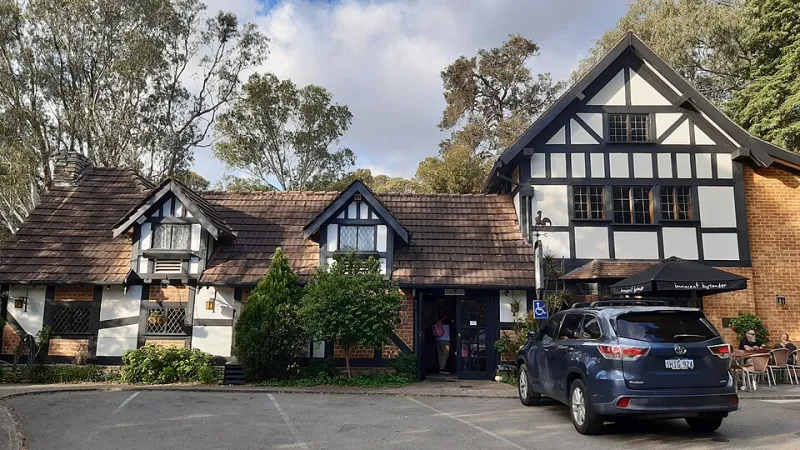
Photo: Ridiculopathy, CC0, via Wikimedia Commons
Ask any Australian over thirty about their first real experience with pokies and there's a decent chance it involves a sticky carpet, a middy of Tooheys, and absolutely no sense of urgency whatsoever. Mate's shout. Someone's got a parma on the way. The reels are spinning but nobody's treating it like life or death.
That atmosphere — unhurried, communal, fundamentally low-stakes in spirit even when real money is involved — defined Aussie gaming culture for decades. And for a long time, online casinos completely missed the point of it.
What the Pub Actually Sold
It's tempting to reduce the traditional Australian pub gaming experience to its mechanics: a row of machines, a loyalty card, some complimentary snacks if you were lucky. But that framing misses what people were actually there for.
"The gaming room was almost incidental to the experience for a lot of regulars," says Dr. Amanda Forsythe, a gaming sociologist at the University of Melbourne who has spent fifteen years studying recreational gambling behaviour in Australia. "People came for the ritual. The familiarity of the space, the social permission to just be somewhere without an agenda. The pokies were the excuse, not the destination."
This is a crucial distinction. The pub wasn't selling jackpots. It was selling an afternoon. A context in which you could exist alongside other people, spend a modest amount of money, and leave feeling like you'd had a genuinely pleasant time — regardless of whether the reels had been kind to you.
The machine itself was almost secondary to the rhythm of the experience: the walk to the bar, the chat with the barman, the glance over at what your mate was playing, the shared groan when someone hit a near-miss three machines down.
Where Online Gaming Got It Wrong (At First)
When online casinos started proliferating in Australia through the late 2000s and into the 2010s, the dominant design language was borrowed wholesale from Las Vegas. Neon. Excess. High-roller energy. The implicit message was this is serious business, dressed up in glamour.
For a certain kind of player, that worked fine. But for the much larger cohort of Australians who'd grown up with the local pub as their primary gaming reference point, it felt jarring. Off-brand in a cultural sense.
"Vegas-style presentation assumes the player wants to feel like a high roller," Dr. Forsythe notes. "But a huge proportion of Australian recreational gamblers don't identify with that at all. They want to feel like they're having a relaxed time. Those are very different psychological needs."
The result was a significant chunk of potential players who tried online casinos, found the experience oddly stressful and impersonal, and drifted back to their local or simply stopped gaming altogether when the pub became less convenient.
The Casual Session: A Cultural Artefact Worth Understanding
So what does "casual" actually mean in this context? It's a word that gets thrown around a lot in gaming marketing, usually to mean "low stakes" in a financial sense. But culturally, it means something richer.
Talk to regular recreational players around Australia and a few themes emerge consistently. Casual means feeling like you can stop at any time without it being a big deal. It means not feeling watched or judged. It means the environment doesn't make you anxious — there's no countdown clock screaming at you to use a bonus, no aggressive upselling between every spin.
Jay, a 44-year-old tradie from Wollongong who plays online a few nights a week, puts it plainly: "I used to go to the pub for a couple of hours, have a few beers, play some pokies. It was just part of the night out. Online I want the same feeling — just something to do while I wind down. I don't want it to feel like I'm in a boardroom making financial decisions."
This sentiment is echoed widely. The ideal session, for most Australian recreational players, has more in common with watching a good TV show than with a trip to a financial market. It should be engaging but not exhausting. Exciting but not stressful. And crucially, it should be easy to walk away from without feeling like you've abandoned something.
The Platforms That Figured It Out
The shift in the Australian online gaming market over the last several years has been noticeable. A new generation of platforms has moved decisively away from the Vegas-inspired aesthetic and toward something that feels — and this is a deliberate word choice — domestic.
Warm colour palettes. Friendly, conversational copy. Interfaces that don't bombard you the moment you log in. Loyalty programmes that reward regular, relaxed play rather than pushing you toward ever-higher deposit tiers. Live dealer products that replicate something of the social texture of a shared gaming space, with real people on screen and the option for light chat.
These aren't accidental choices. They reflect a genuine rethinking of what the Australian market actually wants — and a recognition that the pub gaming experience wasn't just a technological predecessor to online play. It was a cultural template worth understanding and honouring.
"The best online platforms I've seen in the Australian market recently have clearly done their homework," Dr. Forsythe observes. "They're not just digitising a casino. They're trying to replicate a feeling. And that's a much more sophisticated design problem."
Comfort as Competitive Advantage
For the industry, this shift represents something more than a branding exercise. It's a recognition that long-term player relationships are built on trust and comfort, not on manufactured urgency.
A player who feels at home in a digital space — who associates it with relaxation and enjoyment rather than stress and pressure — is far more likely to return consistently over time. They're also more likely to play within their means, because a calm environment supports better decision-making. The hospitality model, it turns out, is good for everyone.
The Australian pub gaming room is never coming back in quite the same form. The world has changed, habits have shifted, and the screen in your pocket is a more convenient companion than a drive to the local. But the spirit of that experience — unhurried, social, genuinely recreational — is very much alive in the platforms that took the time to understand what it was actually about.
The local might be miles away now. But if the design is right, it can still feel like home.